Note to Industry
Machine Foundation and Structural Dynamics
Machine Foundation
Foundations for Rotary and Reciprocating Machines; Impact & Impulsive Machines, and Vibration Isolation
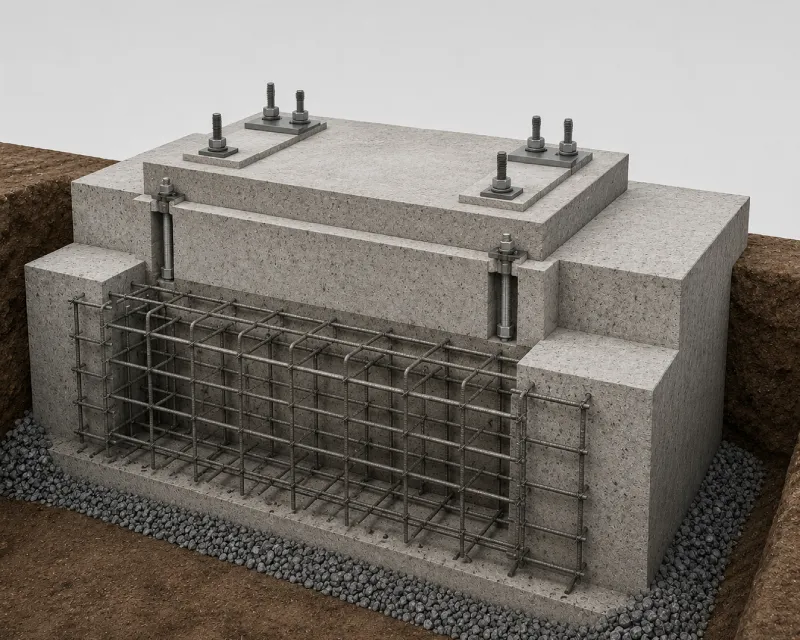
The design requirement for a machine foundation extends beyond ensuring the safety of the foundation itself; it must also guarantee satisfactory machine performance. The primary objective is to minimize machine downtime caused by unacceptable levels of dynamic interaction between the machine and its foundation. Poorly designed or constructed foundations can result in failures and shutdowns, with associated costs often far exceeding the initial investment needed for a properly designed and constructed foundation. Satisfactory machine performance can only be confirmed after the machine is installed on the designed foundation and commissioned for operation.
Machine performance, safety, and stability depend on design, manufacturing, and environmental interaction. Therefore, foundation designers must ensure proper machine performance through sound knowledge of structural dynamics, including soil, foundation, and machine interaction. Lack of attention to foundation vibration testing has often led to machine–foundation performance problems.
Many researchers have contributed to the development of machine foundation engineering, particularly in understanding vibration response. Their work has advanced both the theoretical and practical aspects of dynamic response analysis of machine foundation systems.
Many scientists have contributed to the field of machine foundation laying great emphasis on vibration response of machine foundation system and contributed greatly to the practical and theoretical development of the subject. Study of vibration problems associated with machine foundations necessitated investigations into dynamic response analysis of machine foundation system.
Advances in design and manufacturing have led to high-performance machines with strict tolerances, demanding highly reliable foundations. Therefore, detailed vibration analysis and testing are essential to ensure satisfactory machine performance after installation and commissioning.
This led to studies on the dynamic response of machine foundation systems. Failure investigations and behavior reviews of various machine foundations highlighted the need for improved foundation design and better understanding of machine–foundation interaction.
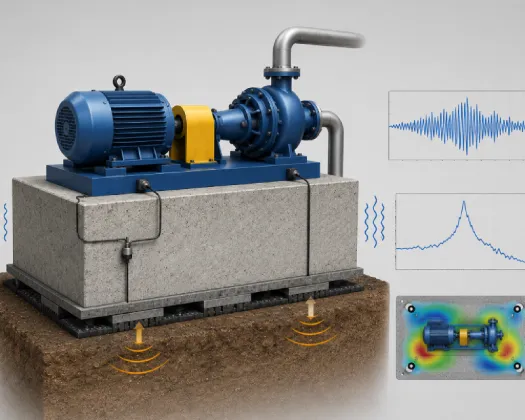
I have over five decades of experience in the design, testing, and troubleshooting of machine foundations. Initially focused on design, I later conducted field vibration testing on various machines, including some foundations I had designed, which revealed significant differences between computed and actual response values. Observations from failure analyses and reviews across industrial projects like petrochemicals, refineries, and power plants highlight the need to improve foundation design for better machine performance, emphasizing more thorough evaluation of site soil data, deeper understanding of machine parameters, and refinements in design philosophy.
These in turn call for improvement in:
Modeling Technique
Analysis Technique
Structural Design Process
Construction Technology
Sharper strategic focus, improved execution discipline, and consistent business performance.
Define clear business goals and actionable strategies aligned with long-term growth and market opportunities.
Streamline workflows and eliminate inefficiencies to improve productivity and operational performance.
Implement metrics and systems to track progress, enhance accountability, and drive continuous improvement.
Build scalable, efficient operations that support sustainable growth and consistent outcomes.
The author’s work has been presented at technical forums in India and abroad. Experience gained from testing and troubleshooting was compiled into the handbook Foundations for Industrial Machines – Handbook for Practising Engineers, published in 2008 with a second edition in 2011. The book covers fundamentals of machine foundation dynamics, emphasizes detailed dynamic analysis, and recommends the use of finite element software for foundation design and analysis.
The BIS code for machine foundation design, IS 2974, consists of five parts covering different machine types. However, these codes are outdated and do not adequately address the stringent vibration tolerance requirements of modern machines.
In 2009, BIS initiated the revision of IS 2974 (Parts 1 to 5), and the author was appointed as Convenor for the task. The revision work has continued for over a decade, with the updated drafts now nearing final publication.

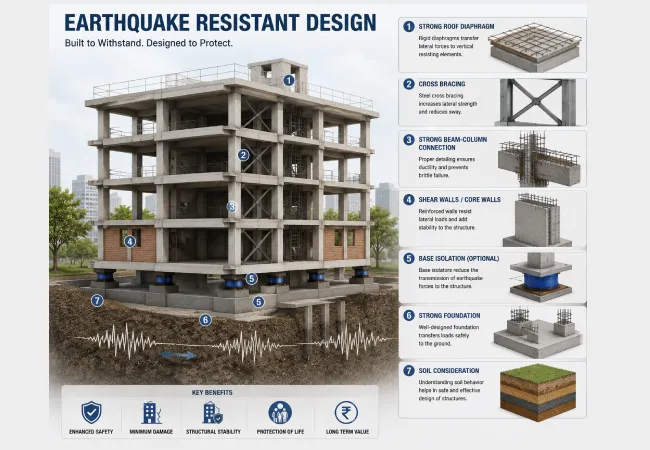
Structural Dynamics
Earthquake Resistant Design of Industrial Systems (Seismic Qualification of Plant, Equipment and Machinery)
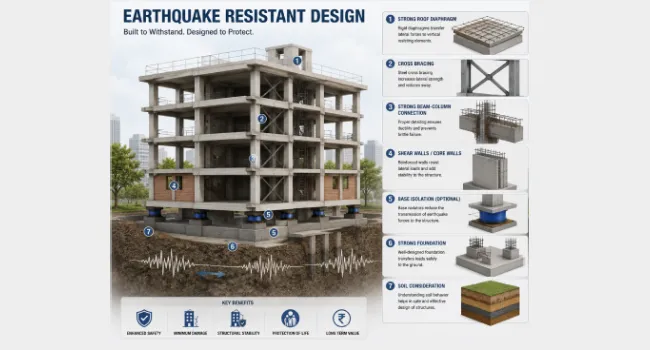
The author has over 54 years of experience in structural dynamics and has worked extensively on the seismic qualification of various industrial equipment and structures. Key work areas include:
- Seismic Safety Regulations for Indian Industries
- Earthquake Resistant Design of Industrial Structures
- Earthquake Design Criteria of Power Plant Equipment
- Earthquake Withstanding and Check Analysis of Equipment
- Seismic Qualification of Plant, Equipment, and Piping System
Four to five decades ago, seismic safety of industrial equipment and structures received little attention outside nuclear and petrochemical industries. Existing codes focused mainly on buildings and lacked provisions for industrial systems, including aspects such as Importance Factor, load combinations, and evaluation of fundamental frequency and time period.
The limited focus on seismic safety of industrial systems was mainly due to low awareness of earthquake risks, lack of guidelines and regulations, and the infrequent occurrence of earthquakes at industrial locations. This highlighted the need to understand seismic qualification methods, including testing and analytical approaches, along with their merits, limitations, and areas requiring improvement.
Seismic safety of industrial systems gained importance in the early 1970s with the establishment of the Narora Atomic Power Plant in a high seismic zone, creating the need for appropriate safety norms and standards.
The author carried out the seismic qualification of all primary-side equipment supplied by BHEL for the Narora Atomic Power Plant. The designs were approved by the Department of Atomic Energy and its international consultants, leading to similar responsibilities for the Kakrapar Atomic Power Station and Kaiga Generating Station.
While the Department of Atomic Energy handled the seismic safety of structures, responsibility for the seismic safety of equipment and machinery rested with the manufacturers. The author became associated with this work in 1975 on behalf of Bharat Heavy Electricals Limited (BHEL) , the supplier of nuclear steam generators.